The Small Business Tax Preparation Checklist for 2026
Tax Season Does Not Have to Be a Nightmare
Every year, millions of small business owners scramble to get their taxes done. Receipts are missing. Categories are wrong. The P&L does not match what the bank says.
It does not have to be this way. If you maintain clean books throughout the year, tax preparation becomes a one-day task instead of a two-week ordeal.
Here is your complete checklist.
Phase 1: Verify Your Books Are Clean
Before you calculate anything, make sure your data is accurate.
Reconcile all bank accounts. Every bank account and credit card should be reconciled through December 31st. If your accounting software shows a different balance than your bank statement, investigate and fix the discrepancy.
Review uncategorized transactions. Search for any transactions without a category. Every dollar needs to be accounted for.
Check for duplicates. Run a duplicate detection report if your software offers one. Duplicate transactions inflate expenses and reduce your apparent profit.
Verify vendor information. For any vendor you paid $600 or more, make sure you have their correct name, address, and tax ID on file. You will need this for 1099s.
Phase 2: Generate Key Reports
These are the reports your accountant or tax software will need.
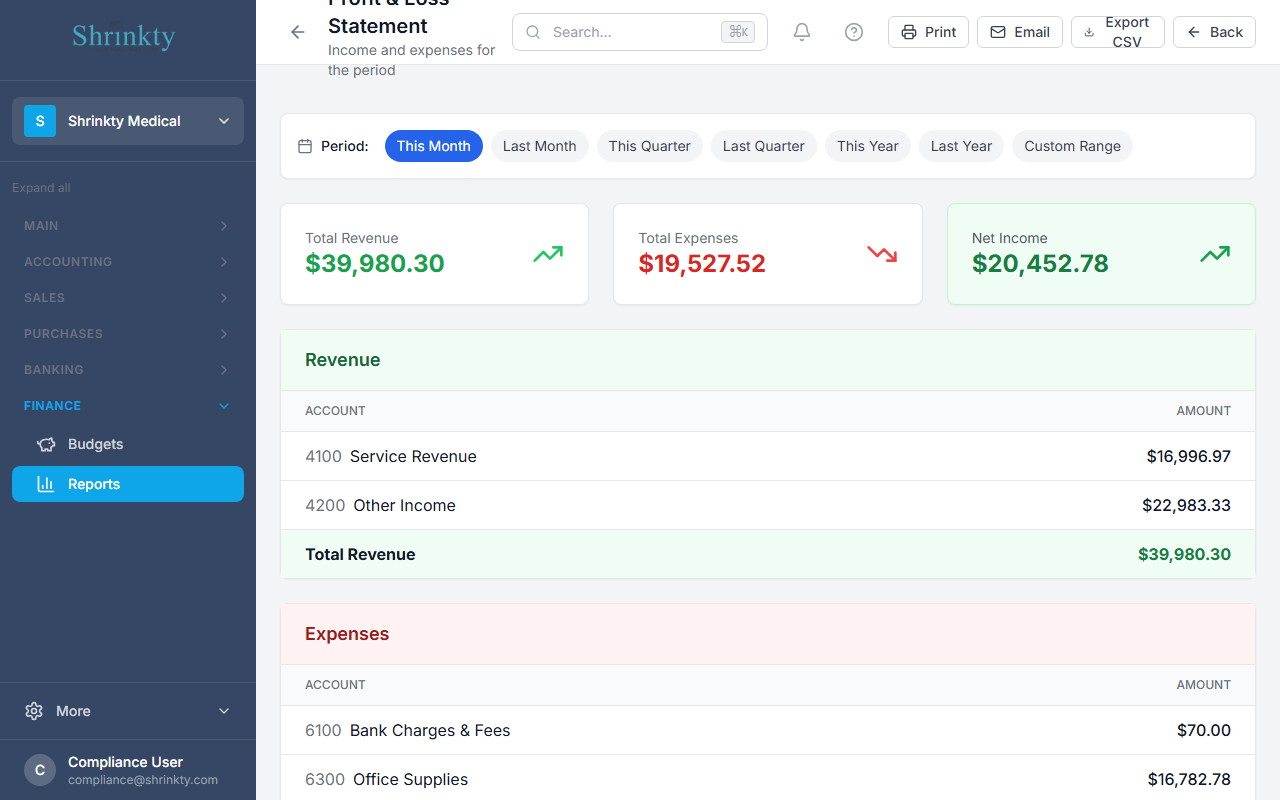
Profit and Loss (Income Statement) This shows your revenue minus expenses for the year. It is the foundation of your tax return. Run it for January 1 through December 31.
Balance Sheet This shows your assets, liabilities, and equity. Your accountant uses this to verify that your books are in balance.
1099 Report If you paid any contractor or vendor $600 or more during the year, you need to file a 1099-NEC. Run the 1099 report to see who qualifies and generate the forms.
Expense Category Detail A detailed breakdown of expenses by category. This maps to the expense lines on Schedule C (for sole proprietors) or your business tax return.
Cash Flow Statement While not always required for taxes, this report helps you and your accountant understand where money came from and where it went.
Phase 3: Gather Supporting Documents
Your tax return needs backup documentation.
- Bank statements for all 12 months
- Credit card statements for all 12 months
- Receipts for expenses over $75 (the IRS requires documentation)
- Vehicle mileage log if you deduct vehicle expenses
- Home office measurements if you claim the home office deduction
- Health insurance premiums paid (deductible for self-employed individuals)
- Retirement contributions (SEP IRA, Solo 401k, etc.)
- Estimated tax payment confirmations (quarterly payments you already made)
Phase 4: File 1099s (Deadline: January 31)
This catches many business owners off guard because it is due before your actual tax return.
For every contractor or vendor you paid $600 or more:
- Verify their W-9 information is on file
- Generate a 1099-NEC form
- Send Copy B to the recipient by January 31
- File Copy A with the IRS by January 31
Spark Ledger has a built-in 1099 report that identifies qualifying vendors and generates the forms automatically.
Phase 5: Calculate and Review
Review your profit carefully. Your net profit on the P&L is what you will pay taxes on (for pass-through entities). Does it seem right? If profit seems too high or too low, investigate before filing.
Check for missed deductions. Common ones that get overlooked:
- Software subscriptions (including Spark Ledger)
- Professional development and courses
- Business insurance premiums
- Bank fees and merchant processing fees
- Office supplies purchased with personal cards
Consider quarterly estimated taxes for next year. If you owed more than $1,000 in taxes this year, the IRS expects you to make quarterly payments next year. Your accountant can help you calculate the right amounts.
How Good Software Makes This Easy
If you have been maintaining your books in Spark Ledger throughout the year, most of this checklist is already done:
- Bank accounts are reconciled automatically
- Transactions are categorized by AI
- Receipts are attached via photo upload
- The 1099 report is one click away
- P&L and Balance Sheet generate instantly
The best tax preparation happens throughout the year, not in April.
Start your free trial of Spark Ledger and make next tax season the easiest one yet.